

Ursodeoxycholic Acid 300 mg Tablets
June 5, 2026
Etoricoxib 90 mg Tablets
July 30, 2026Betahistine 16 mg Tablets
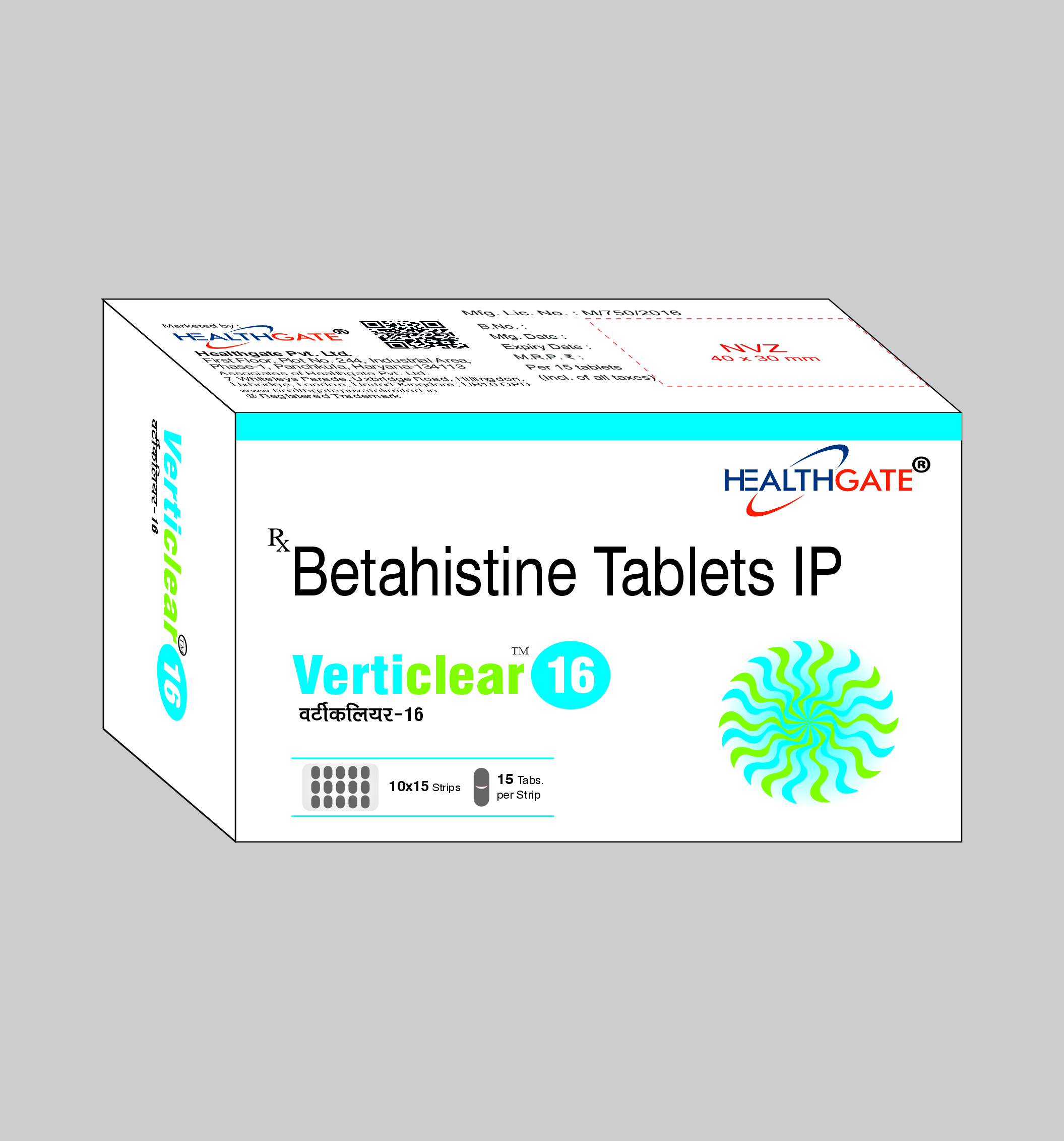
Betahistine Tablets
Betahistine is a medicine that you have to get from a doctor. Betahistine helps people who have Meniere’s disease, which is a problem inside the ear. Betahistine stops the feeling of spinning, which is called vertigo. It also stops ringing in the ears. Helps with short‑term hearing loss. This works by improving blood flow inside the ear. That helps fix the reasons for these confusing symptoms.
To make Betahistine work well, you should take Betahistine each day exactly as your doctor told you. It is very important that you take this medicine with food or right after you eat so your stomach does not feel upset. You can also change a few things in your day. For example, keep your salt intake moderate. Avoid moving your head quickly. Those changes can help Betahistine work better.
Medical Benefits:
- Consistent vertigo control: It helps reduce how often you get dizzy spells and makes them less severe, allowing you to go about your day without constant worry.
- Quieter ears: It helps quiet the persistent, disruptive ringing or buzzing in your ears, which can enhance your concentration and help you sleep better.
- Greater daily stability: By treating your inner ear’s maintenance mechanisms, this medication helps you stand and walk with a much lower risk of falling.
Uses:
- Management of Vertigo: Betahistine is used to treat vertigo symptoms like dizziness and spinning sensations by offering relief for patients with vestibular disorders.
- Meniere’s Disease Treatment: Betahistine helps to cure Meniere’s disease, decreasing the frequency and severity of vertigo episodes, tinnitus, and hearing loss associated with the condition.
- Improving Blood Circulation in the Inner Ear: Betahistine improves blood circulation in the inner ear by stabilizing balance mechanisms and reducing symptoms like vertigo and imbalance.
- Reducing Tinnitus Symptoms: Betahistine helps reduce ringing in the ears by giving relief to patients with vertigo and tinnitus.
Directions for Use:
- Betahistine can be taken after eating food, as suggested by your physician.
- Follow your doctor’s instructions on the dosage and timing of this medication to ensure safety.
- Swallow Betahistine as a whole with a glass of water.
- Do not chew, crush, or break it.
Dosage:
Take this medicine as prescribed by your healthcare professional. Do not take an overdose of this medicine; otherwise, it can have a worse effect on your body.
Storage:
Place this medicine in a cool, dry place. Do not keep this medicine in front of children and pets, and also place it away from direct sunlight.
Side Effects:
- Mild nausea or indigestion
- Headache
- Stomach bloating or mild discomfort
Precautions:
- You have been directed to take Betahistine to relieve vertigo (dizziness), hearing problems, and tinnitus (noise in the ear) that come with Ménière’s disease.
- It can only reduce the number and severity of attacks but may not completely stop them.
- Taking this medicine with food can help decrease stomach problems.
- Take this medicine at the same time each day to maintain a steady amount of the medicine in your body.
- Ask your physician if you have a history of stomach ulcer, asthma, or low blood pressure.
- Ask your physician if you are pregnant, planning pregnancy, or breastfeeding.
Frequently Asked Questions (FAQ’s):
1. What are these tablets used for?
They are commonly prescribed to manage vertigo, dizziness, and balance problems associated with Ménière’s disease.
2. How do these tablets work?
They help regulate blood flow in the inner ear, which may reduce episodes of dizziness and balance disturbances.
3. Can these tablets help with vertigo?
Yes, they are prescribed to help manage vertigo symptoms, depending on the underlying cause.
4. Can these tablets help reduce ringing in the ears?
They may help some patients with ear-related symptoms, but their effectiveness for tinnitus varies.
5. What are the common side effects?
Common side effects include nausea, indigestion, headache, and stomach discomfort.
6. Should these tablets be taken before or after food?
They are generally taken with or after food to help reduce stomach discomfort, following the doctor’s instructions.
| Composition | Betahistine 16mg |
|---|---|
| Packaging | 10 X 15 (Alu Alu) |